User Research · Round 1, August 2025
Understanding what fans actually want
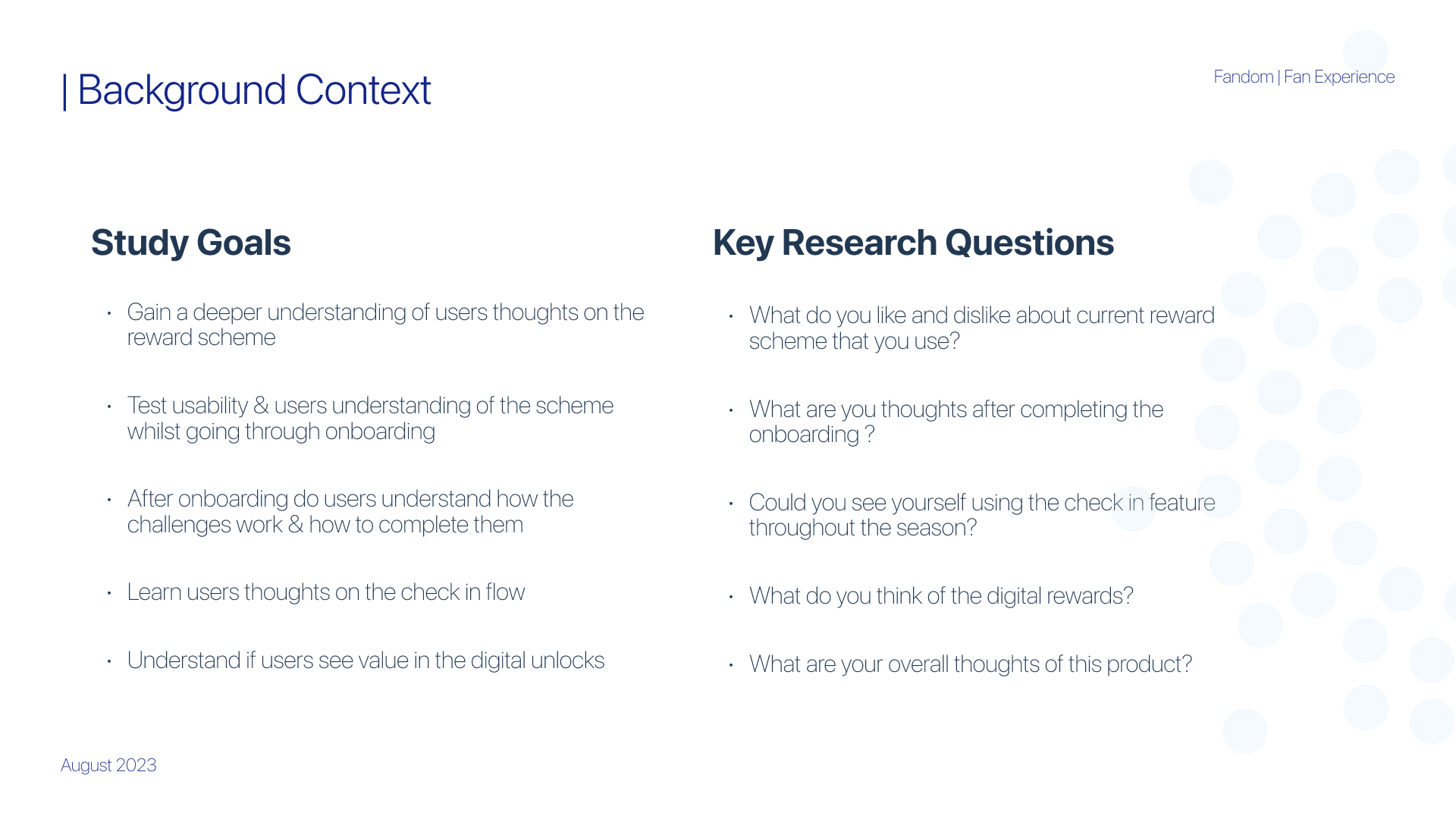
We ran moderated usability sessions with five fans per round, testing onboarding, check-in, challenges and the rewards store. Each round shaped the next iteration directly.
Cortex builds fan engagement software for sports organisations. I design their fan experience platform, a gamified product that rewards fans for physical and digital engagement, used by clubs including Arsenal FC, Formula 1 and the MLS.
Context
Cortex builds fan engagement software for the world's biggest sports organisations, 50+ clubs and properties including Arsenal FC, Formula 1, Wembley Stadium, Sky Sports and the MLS. Their platform helps clubs build gamified fan ecosystems on owned channels, turning casual viewers into loyal, data-rich audiences.
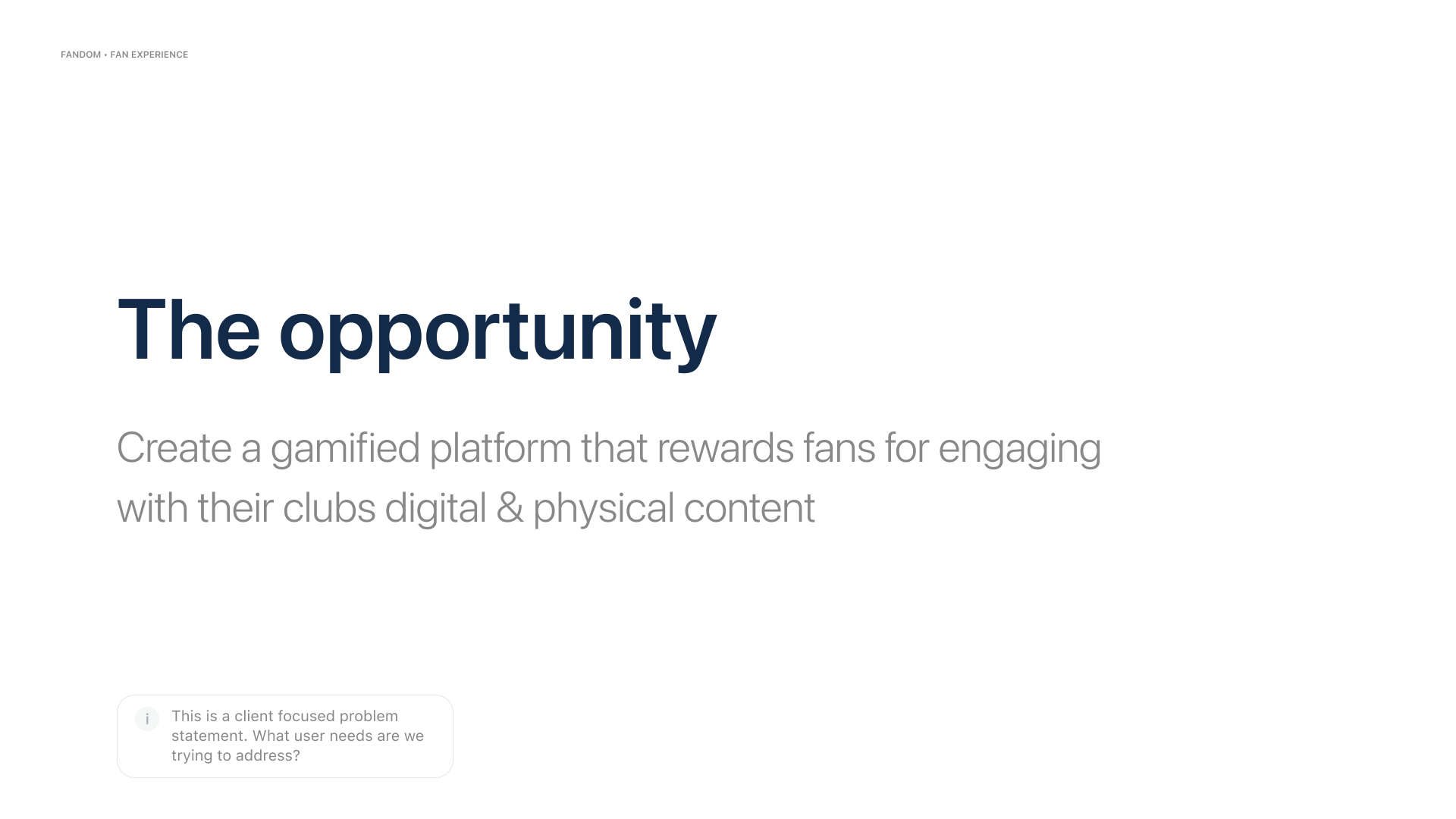
The fan experience platform is Cortex's core SaaS product. It lets clubs reward fans for physical and digital engagement, checking in at a match, completing challenges, competing in leaderboards, all while collecting first-party fan data that drives sponsorship and commercial value.
I joined as lead designer to build the platform from zero to one. That meant owning both the fan-facing web experience and the club-side SaaS CMS staff use to create challenges, badges and rewards.
The challenge
"How might we create a rewards platform that provides tasks and achievements that fans actually enjoy completing?"
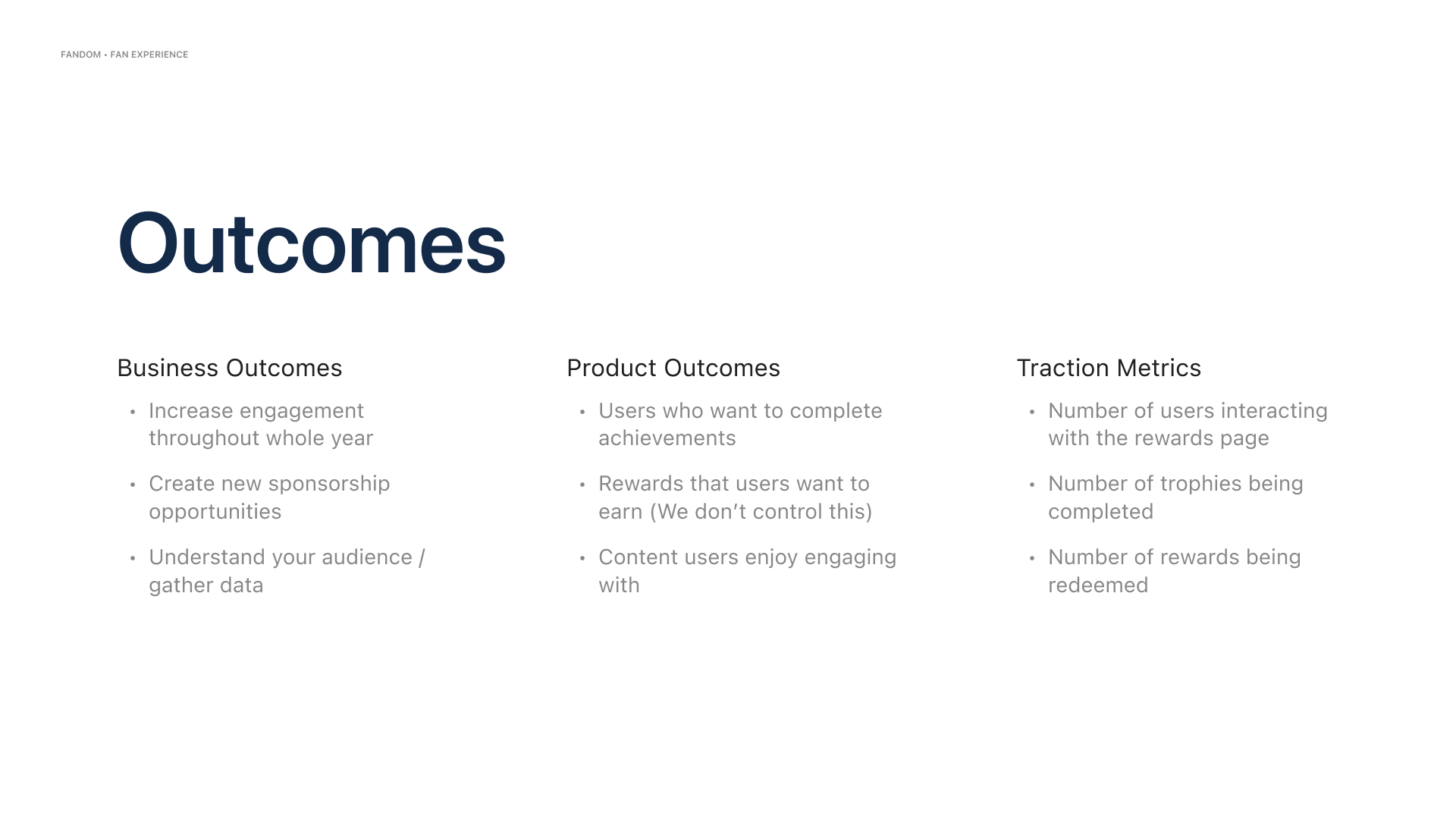
Design framing, Fandom by CortexThree outcomes we needed to hit: increase engagement across the full season, open new sponsorship opportunities for clubs, and build a first-party data asset clubs actually own.
What I owned
No other designer on the project. I owned the full fan-facing experience and the club-side tooling, every screen, every component, every research round.
User Research · Round 1, August 2025
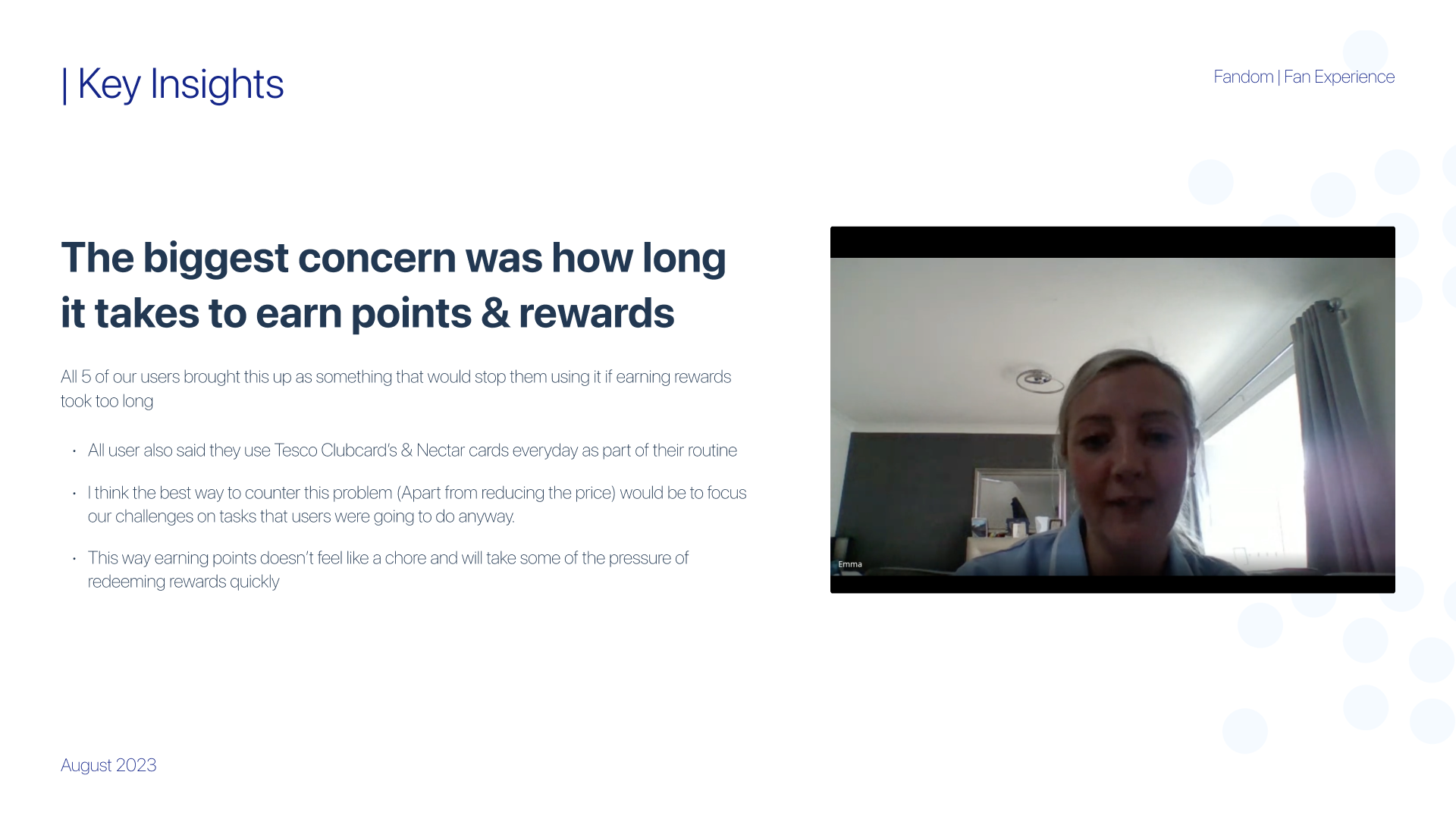
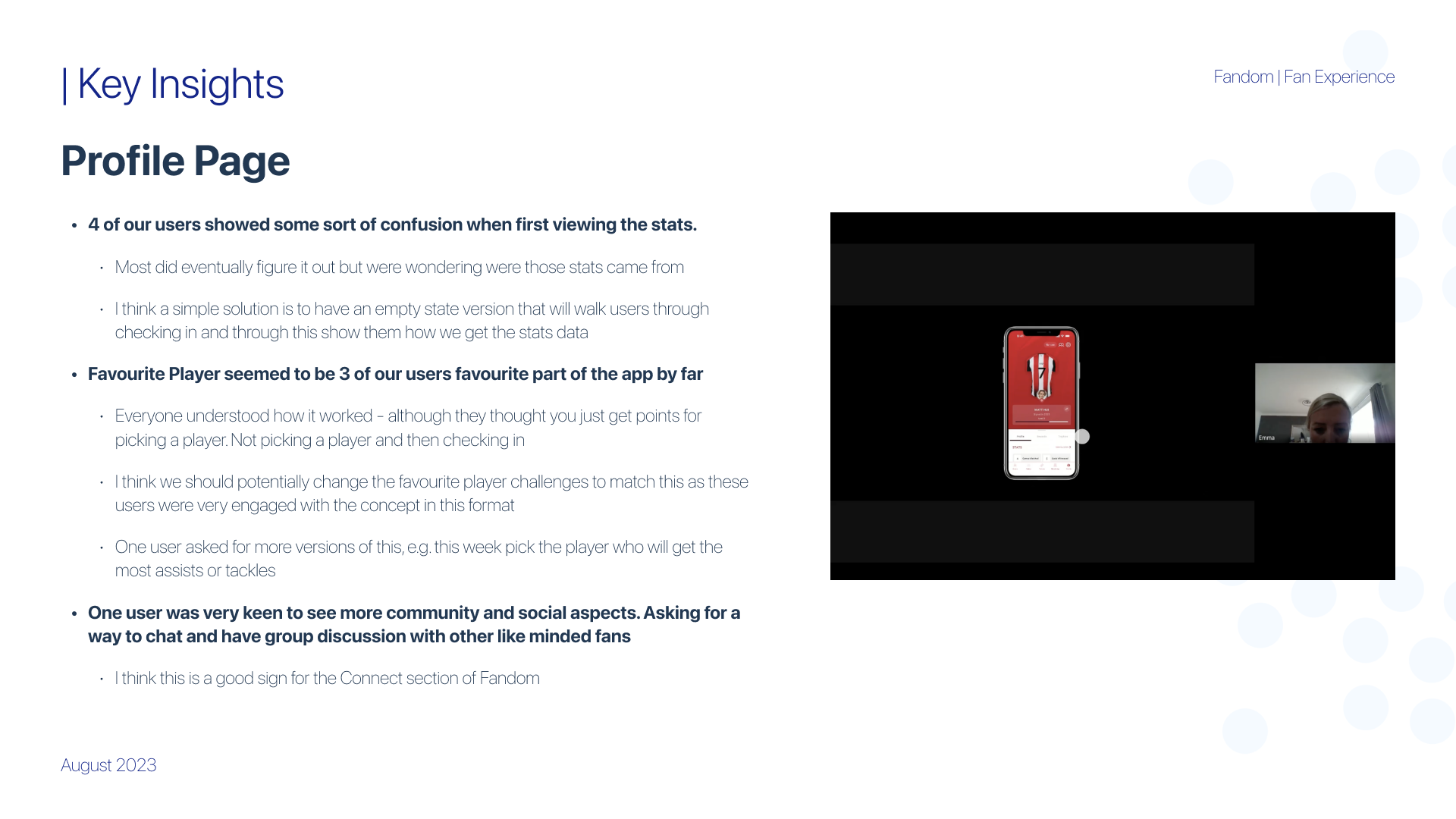
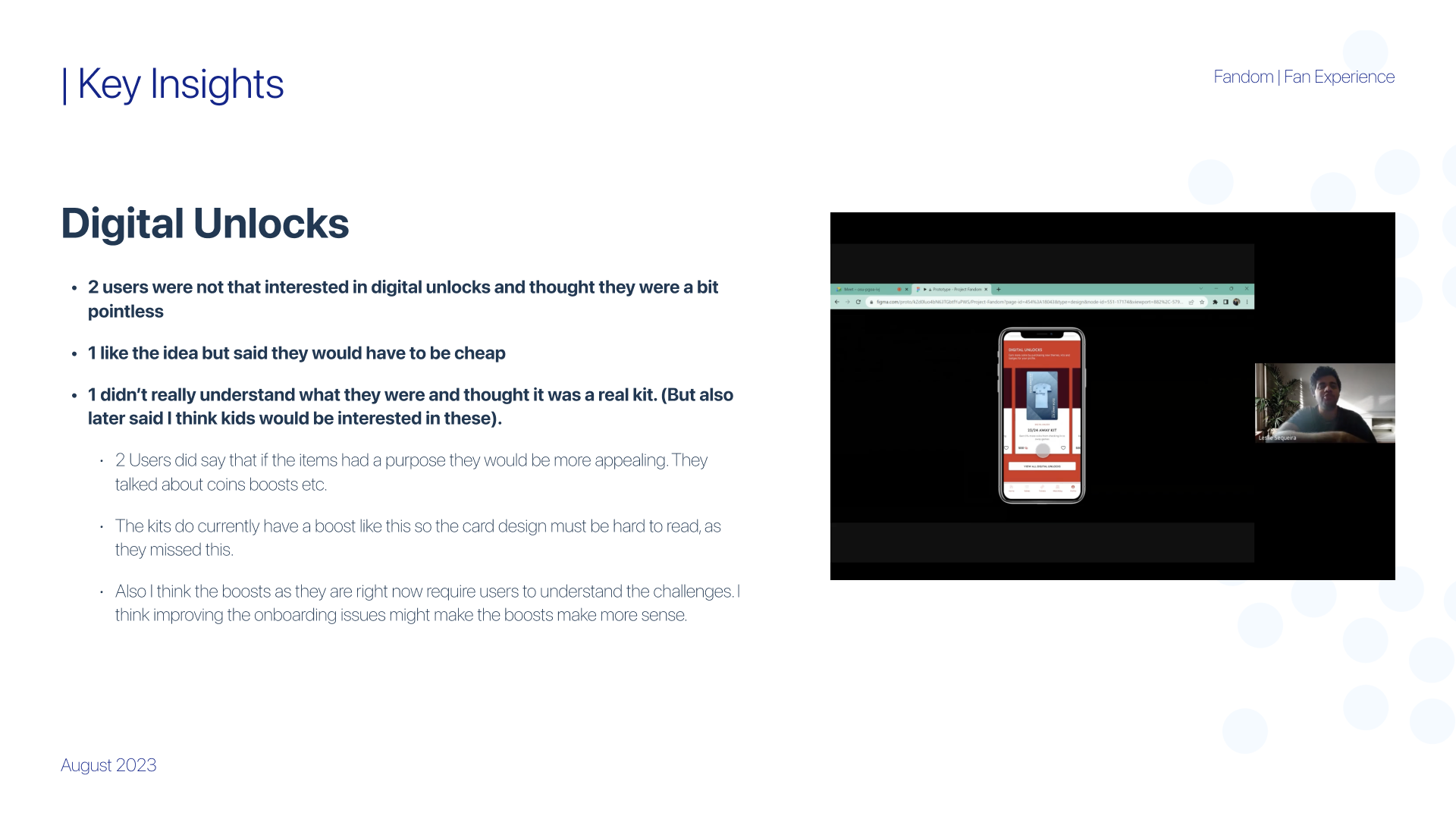
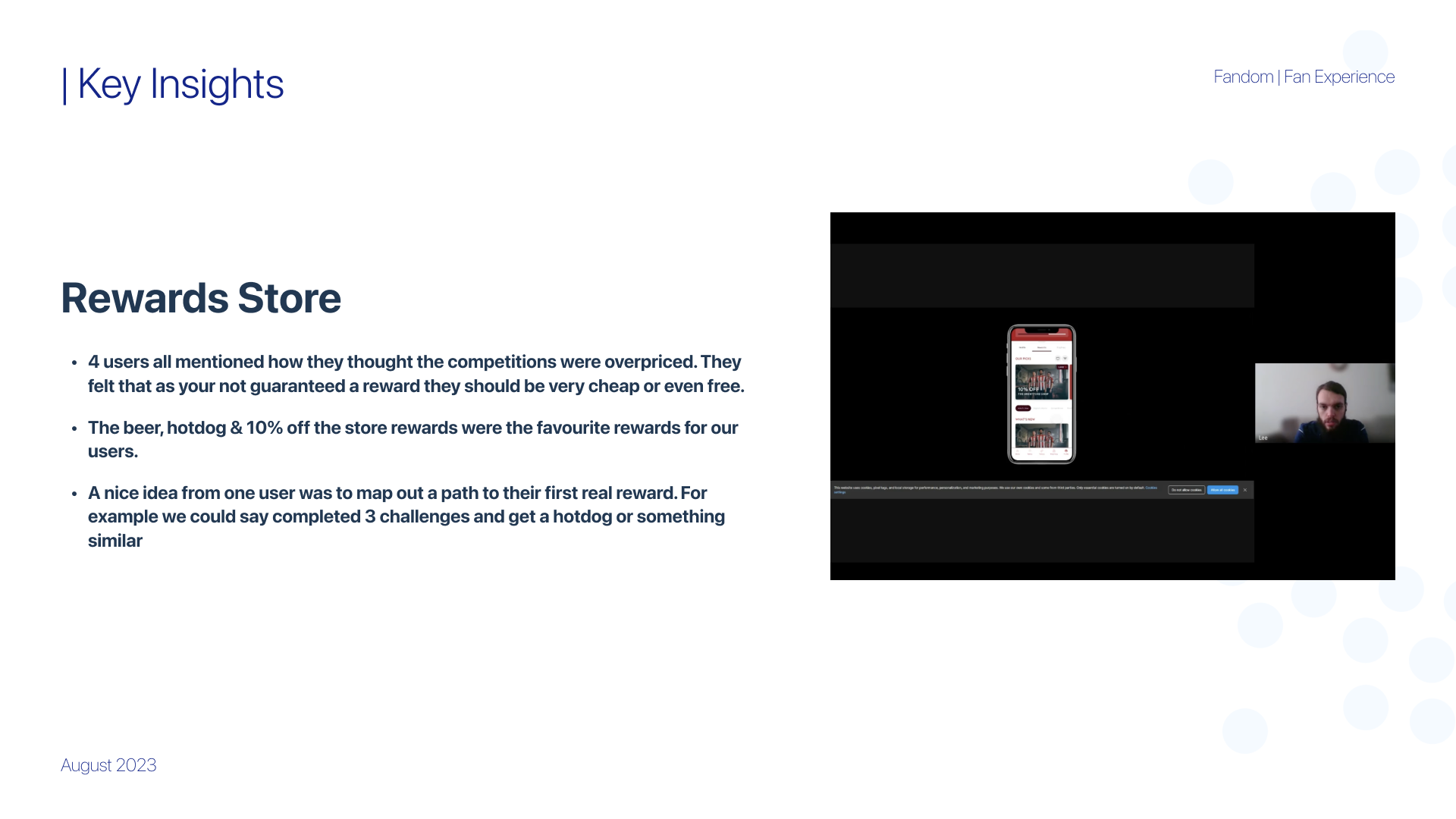
We ran moderated usability sessions with five fans per round, testing onboarding, check-in, challenges and the rewards store. Each round shaped the next iteration directly.
What we learned
Clear patterns emerged that shaped every design decision.
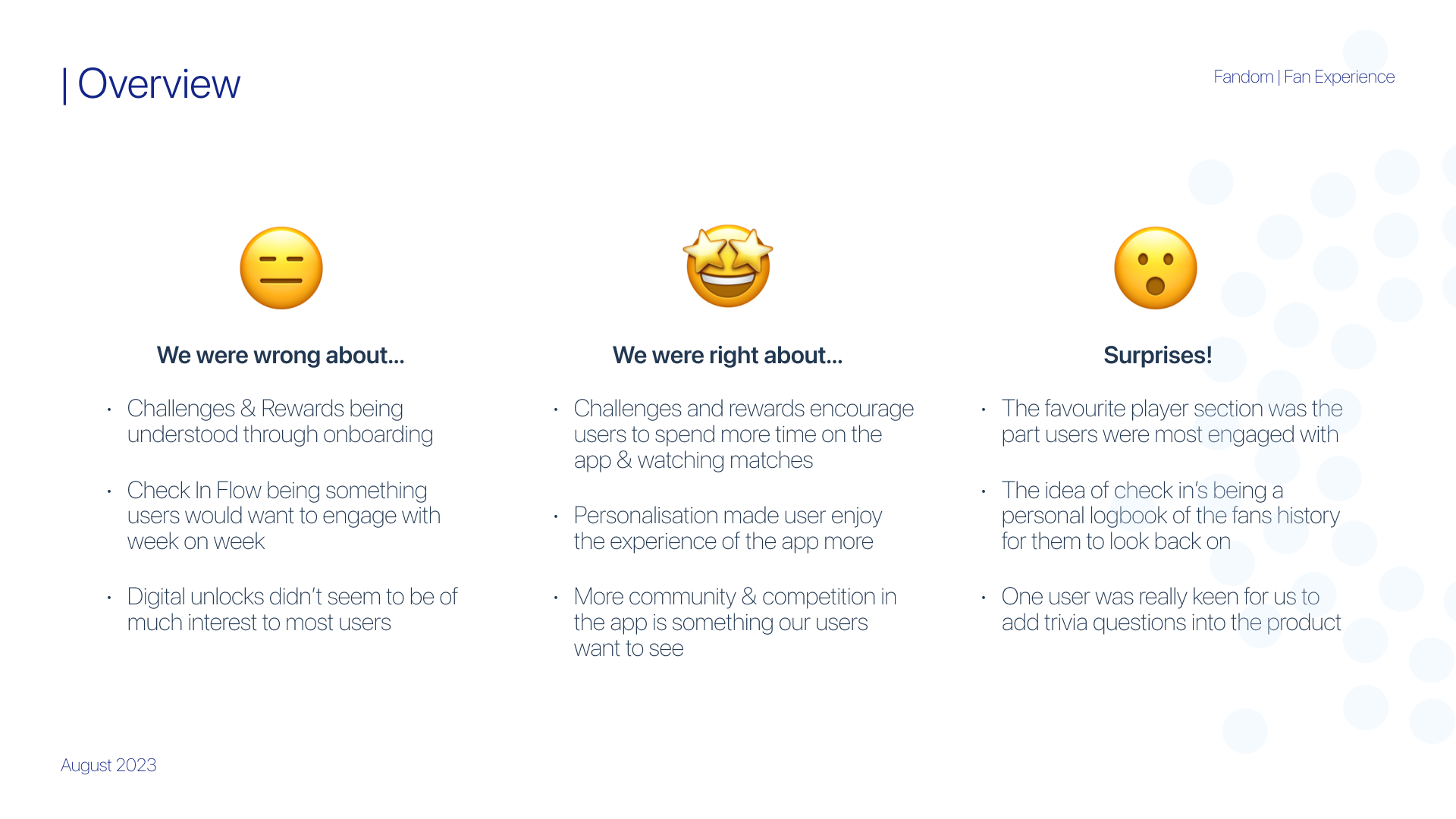
Research rounds 2 to 7

Design Process
Research findings fed directly into design sprints. I worked with the PM and engineers to prioritise what to build, in what order, and at what fidelity.
Outcomes
We were right that personalisation and challenges drive engagement. We were wrong that users would engage with digital unlocks immediately, most needed tangible, low-cost rewards first. The check-in flow, reframed as a football diary, became one of the most-loved features.
"Challenges and rewards encourage users to spend more time on the app and watching matches. Personalisation made users enjoy the experience more."
Usability testing participant, Round 1, August 2025The biggest design lesson: users don't want to feel like they're working for rewards. The most successful challenges were built around things fans already do, watch matches, check the app before kick-off, pick a favourite player. Design that aligns with existing behaviour beats design that asks for new behaviour every time.
Final product
The fan-facing experience and the club-side CMS, designed from zero, tested across seven rounds, and handed to engineering with a complete design system.
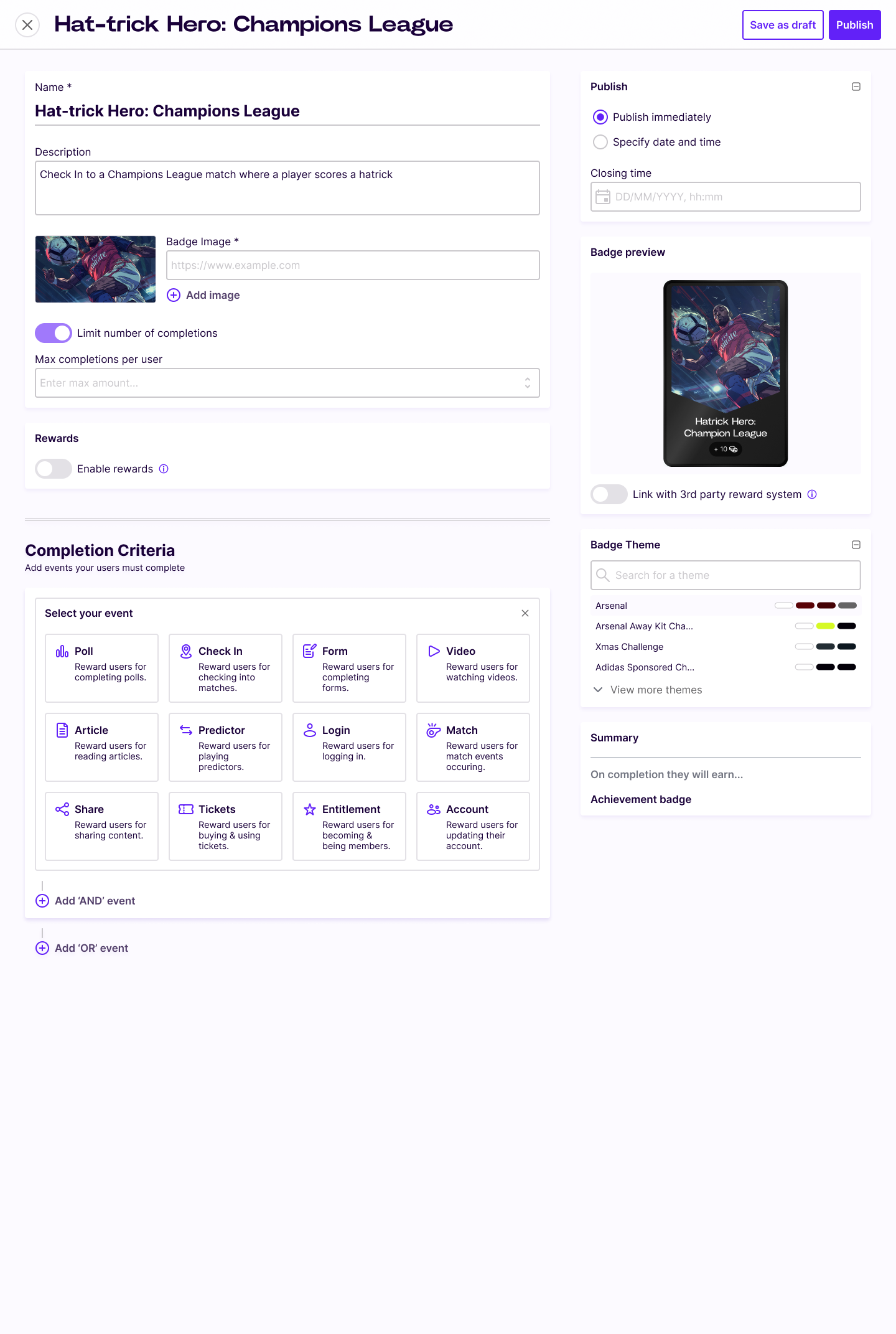
Club CMS, challenge builder: club staff configure event type, completion criteria, points and badge reward in a single guided flow.
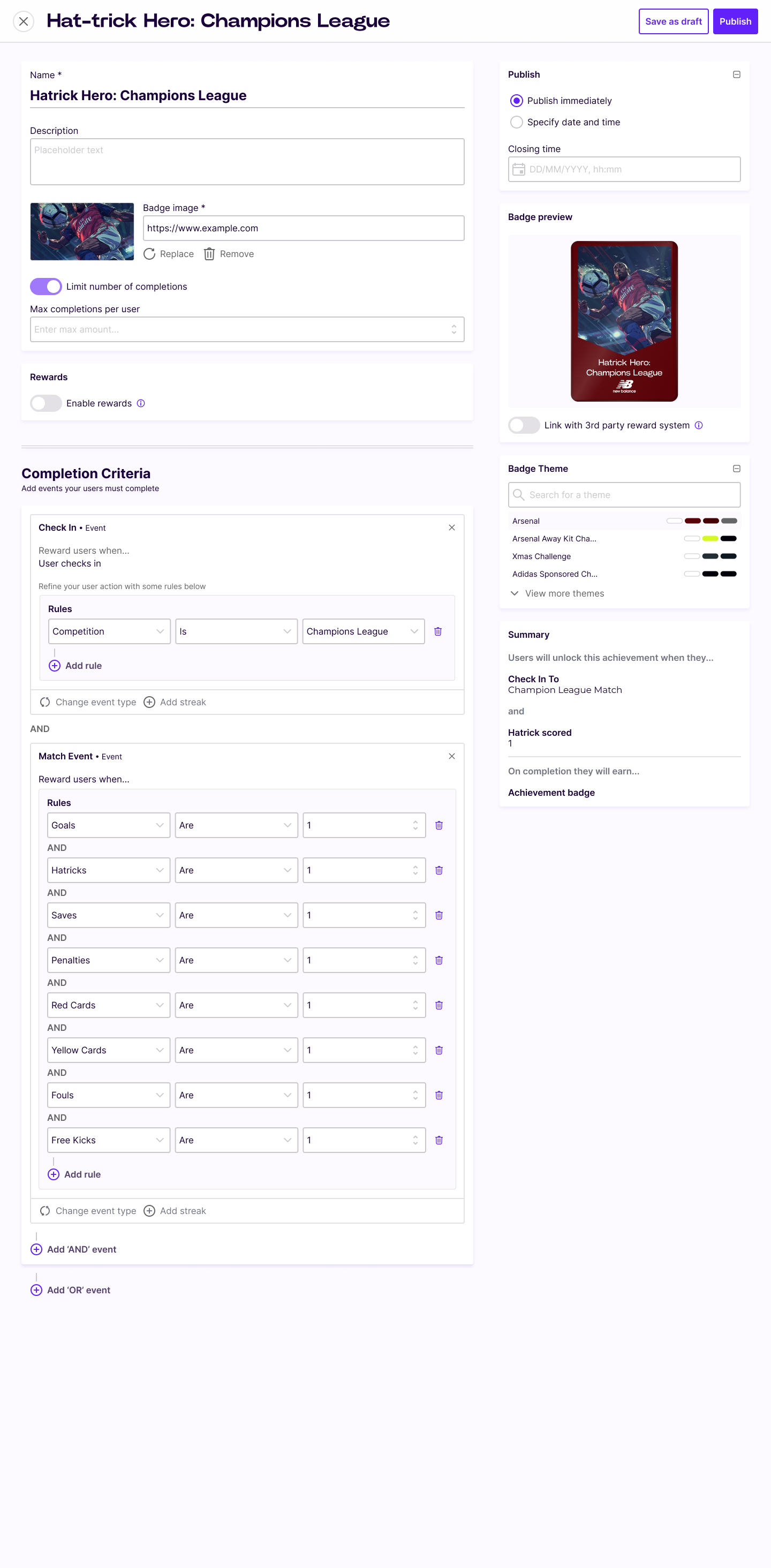
Challenge builder continued: reward logic, scheduling and publish controls, built so non-technical club staff can run the platform without developer support.